
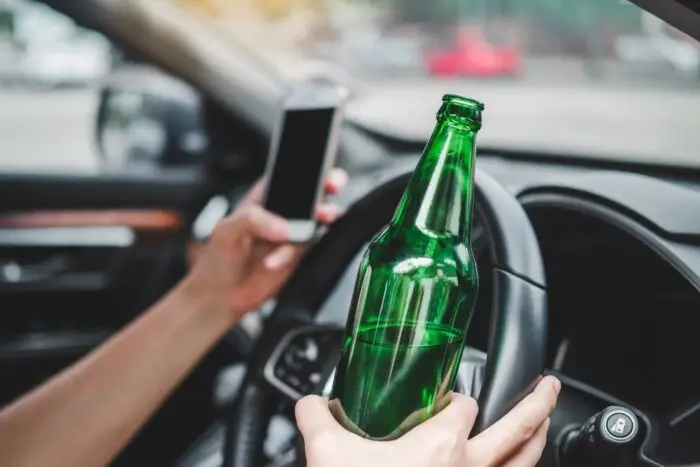
Most ignition interlock devices will fail a test if your blood alcohol concentration (BAC) is 0.02% or higher. That means even a small amount of alcohol in your system can cause a failed test. The specific BAC limit can vary…

A DWI and a DUI are similar offenses, and in many cases, they carry the same level of severity. Both terms refer to driving under the influence of alcohol or drugs, but the difference depends on the terminology used in…

The difference between DWI (Driving While Intoxicated) and DUI (Driving Under the Influence) depends on how the law defines each term in a specific state. In Kansas, both terms are often used interchangeably to refer to operating a vehicle under…
In Kansas, a DWI or Driving While Intoxicated offense is typically referred to as a DUI (Driving Under the Influence). While a first or second DUI offense is often charged as a misdemeanor, a third DUI can become a felony…

The terms DWI and DUI are often used when someone is arrested for driving under the influence of alcohol or drugs. While they sound similar, the meaning and severity can differ depending on the state where the arrest takes place.…

Police officers make mistakes in DUI cases more often than people realize. These errors can lead to dropped charges, reduced penalties, or even case dismissal. If you're facing a DUI charge, identifying mistakes made during your traffic stop, arrest, or…

If you have an ignition interlock device (IID) installed in your vehicle, you cannot drink any alcohol at all before driving. These devices are designed to detect even small amounts of alcohol in your breath, and any positive reading will…

In Kansas, there’s no legal difference between a DUI (Driving Under the Influence) and a DWI (Driving While Intoxicated). The state uses the term DUI for all impaired driving offenses, covering both alcohol and drug-related impairment. While some states separate…

In Kansas, a DWI, also known as a DUI (Driving Under the Influence), can be classified as either a misdemeanor or a felony depending on prior convictions and specific case details. The penalties increase significantly with each offense, especially if…

In the United States, the terms "DUI" (Driving Under the Influence) and "DWI" (Driving While Intoxicated or Impaired) are both used to describe offenses involving impaired driving. Yet, different states use different terminology depending on how their laws are written.…